
2017 MARMO MECHANICA LCH 711M EDGE POLISHING MACHINE
ConditionUsed
1 available
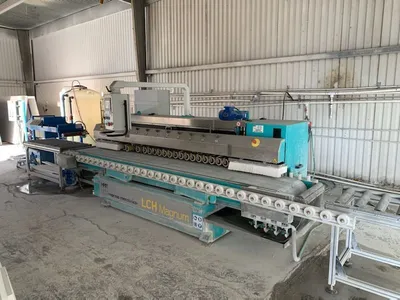
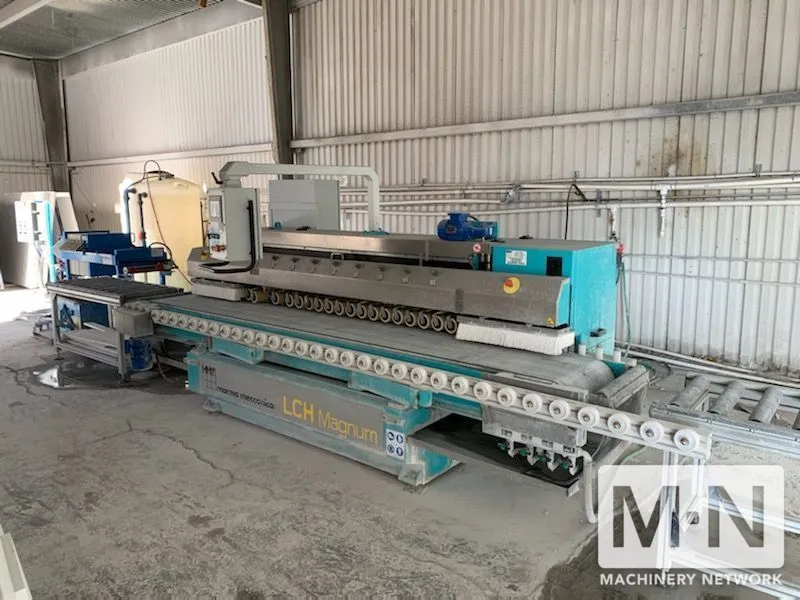
Type: Automatic horizontal edge polishing machine
Application: Marble, granite, quartz, engineered stone
Process: Continuous feed (inline production)
Edge types: Flat, squared edges + chamfering, optional profiling
Max material thickness: up to 60 mm (6 cm)
⚙️ Core Specifications
Polishing heads: 7
Beveling (chamfer) motors: 2 (45° upper & lower)
Total power: ~17.4 HP (≈13 kW)
Electrical: 230V / 3-phase / ~60 amps
Water consumption: 12–15 gallons/min (≈45–55 L/min)
Max abrasive size: 150 mm (6")
📏 Machine Dimensions & Capacity
Machine size: approx. 10 ft × 4 ft × 4 ft
Weight: ~3,000 lbs (≈1.36 tons)
Minimum part size: ~3" × 16"
Maximum part size: No practical limit (continuous feed)
Extension tables: ~3 ft standard
🚀 Performance
Production speed:
Typical: 80–150 linear ft/hour
Operation: Fully automatic, minimal operator supervision
Processing: Single-pass polishing with all heads
🔧 Features
Continuous conveyor system with adjustable speed
Pneumatic mandrels with sealed protection system
Motorized pressure bar for stability
Built-in chamfering (top & bottom)
Optional:
V-grooving / miter cutting
Drip edge cutting
Profiling heads
No foundation required; simple installation
🏭 Practical Advantages
Compact footprint for shops
Handles high-volume production
Works on fragile and engineered materials
Reduces slab breakage via stable transport system
🧠 Bottom Line
The LCH 711 M is considered an industry-standard horizontal edge polisher—best suited for:
Countertop shops
Medium to high production environments
Straight-edge polishing with optional mitering and drip features
If you want, I can also break down differences vs LCV 711 (vertical) or give you used market pricing—those vary quite a bit depending on year and configuration.
Ads do not influence the answers you get from ChatGPT. Your chats stay private. Learn about ads and personalization
We use cookies to improve your experience. Privacy Policy.